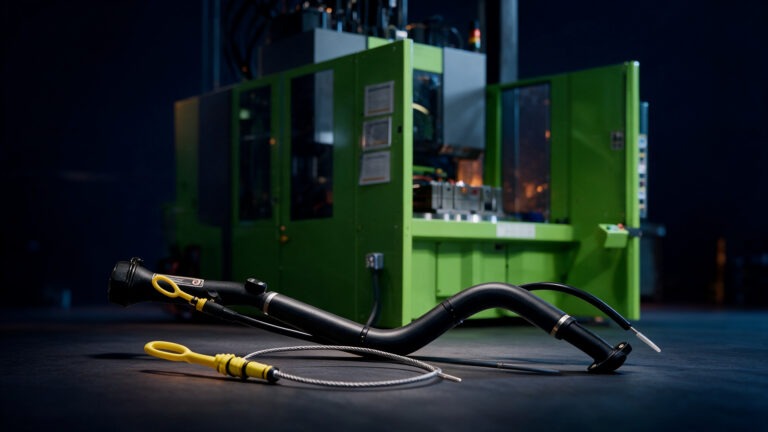
There are many instances in which a properly designed plastic component can replace a metal part. Let‘s explore some of the key advantages of “metal–to–plastic conversions.”
MORE DESIGN OPTIONS Unlike metals, plastic materials can be formulated to better suit a specific application. In this way, plastic offers increased options for part design.
BETTER FLEXIBILITY Parts made of plastic can offer increased physical flexibility as well as equal or greater strength.
REDUCED COST Of course, plastics can be much less expensive than metals, providing significant savings, especially if used in place of aluminum or stainless steel.
LESS WEIGHT Weight is another major issue. Plastic parts typically weigh a fraction of the metal parts they replace.
CORROSION RESISTANCE Corrosion is a real problem with many metal components. Plastics are corrosion resistant. Unlike steel or aluminum, plastics will not rust or corrode over time.
OVERMOLDING Plastics with good high temperature resistance can be over-molded with rubber. For example, a metal part that includes an over-molded rubber seal can very likely be converted to plastic and rubber.
Advantages
- Decreased weight
- Increased design options
- Combined features
- Equal or greater strength
- Reduced cost
- Corrosion resistance
- Elimination of machining
Good Candidates for Conversion
Oil System Components
- Fill tubes
- Pick-up Tubes
- Oil pans
Cooling System Components
- Tanks
- Access covers
- Shrouds